
Measurement Guide
How to Measure Accurately
Your body composition calculations are only as good as your measurements. A small error of just half an inch can throw off your results significantly.
1. Waist Circumference
The waist measurement is critical for the US Navy, WHtR, and WHR methods. Even a small error here can affect your results significantly.
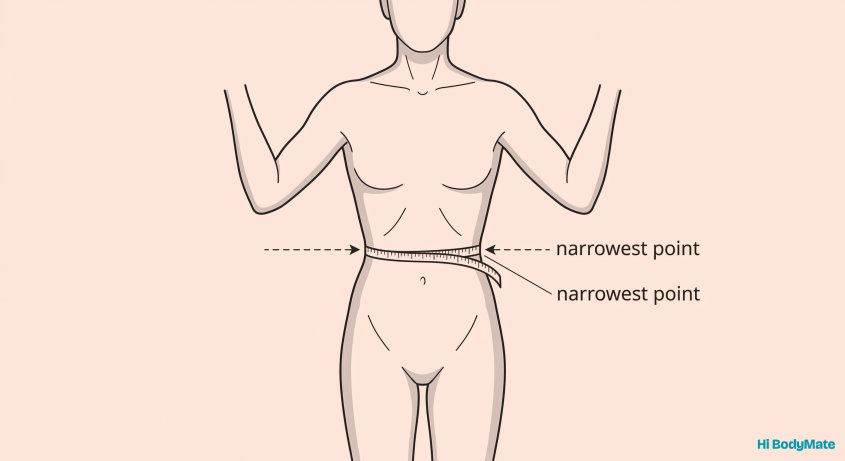
- Men: Measure at the level of the navel.
- Women: Measure at the natural narrowest point, typically midway between the lowest rib and the top of the hip bone.
- Keep the tape snug against the skin — not compressing.
- Exhale naturally and measure before inhaling again.
- Stand upright with your feet together.
2. Neck Circumference
Used in the US Navy body fat formula. The tape position must be precise to get consistent results.
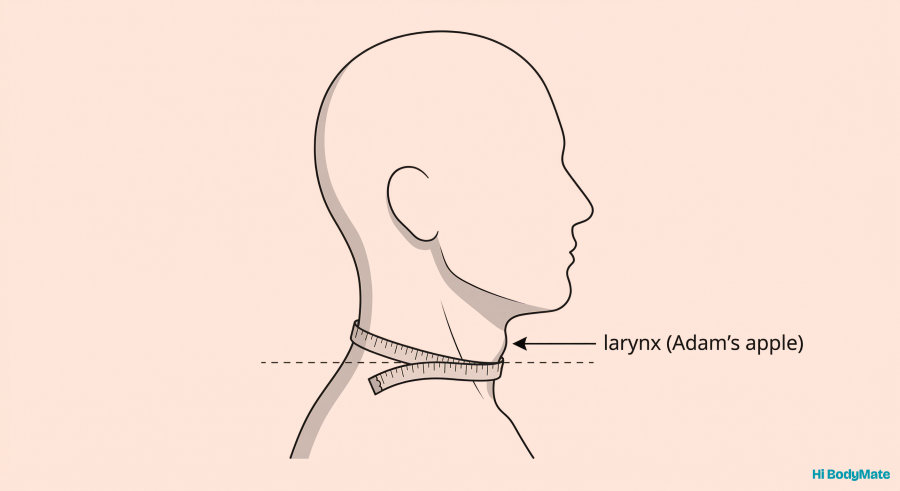
- Place the tape just below the larynx (Adam's apple).
- The tape should be horizontal — parallel to the floor.
- Keep your head straight and relaxed, looking forward.
- Do not tilt your chin down, as this compresses the neck.
3. Hip Circumference
Used in the US Navy formula (women), BAI, and WHR. Measure at the widest point of your buttocks.
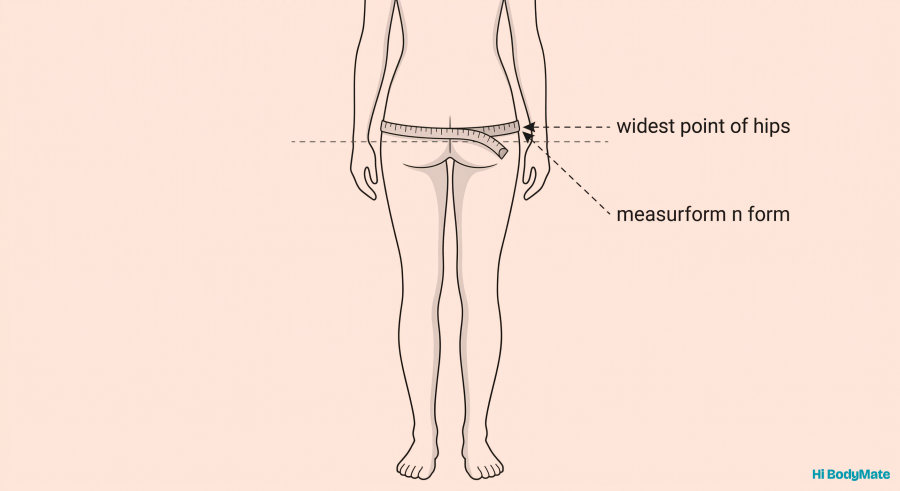
- Stand upright with your feet together.
- Locate the widest area of your hips and buttocks.
- Ensure the tape is parallel to the floor all the way around.
- Take the measurement without clothing if possible, or in thin clothing only.
4. Height
Used in BMI, US Navy, BAI, and WHtR. Measure in the morning when you are tallest — you can lose up to 1 cm throughout the day due to spinal compression.
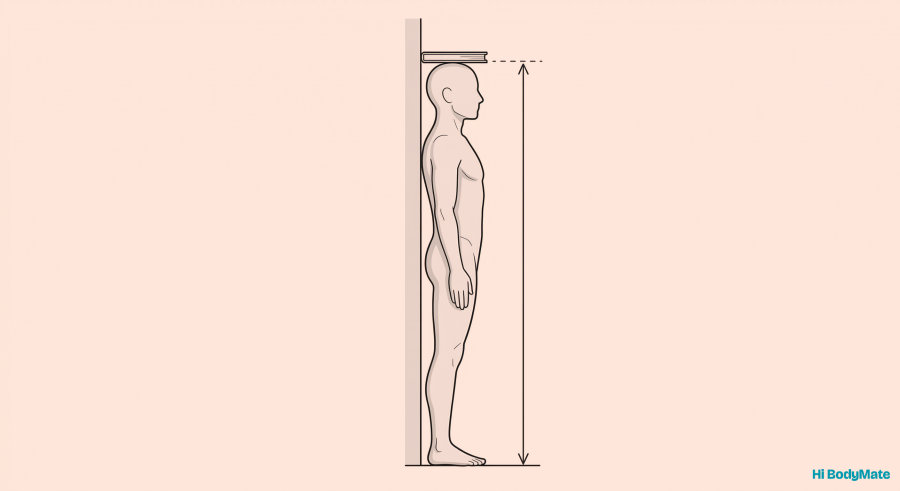
- Remove shoes and stand on a hard, flat surface.
- Stand with your back against a wall, heels together touching the wall.
- Keep your eyes level — looking straight ahead, not up or down.
- Use a flat, hard object (like a book) placed on top of your head, flush with the wall, to mark your height.
- Measure from the floor to the mark.
5. Body Weight
Used in BMI. For consistent results, always weigh yourself under the same conditions.
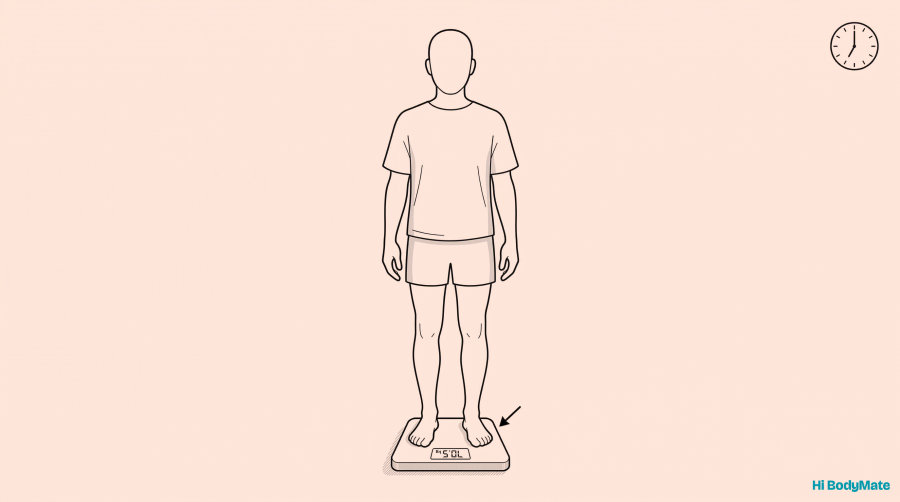
- Weigh yourself in the morning, after using the bathroom and before eating or drinking.
- Use the same scale every time, on a hard, flat surface.
- Wear minimal or no clothing for the most accurate reading.
- Track weight over several days — daily fluctuations of 1–2 kg are normal.