Blog › Nutrition
Best Foods for Muscle Gain
Building lean muscle requires more than just lifting — your nutrition provides the raw materials. These foods deliver the protein quality, calories, and micronutrients your muscles need to grow and recover.
The Fundamentals: How Food Builds Muscle
Muscle growth happens in two phases: the mechanical stimulus (resistance training) and the repair and growth phase (nutrition + recovery). Without adequate protein, your muscles cannot build new tissue — training stress breaks them down, but food is what rebuilds them larger.
The key targets: 1.6–2.2g of protein per kg of body weight per day, and a modest caloric surplus of 200–400 calories above maintenance. More calories than that accelerates fat gain without proportionally increasing muscle growth.
1. Chicken Breast
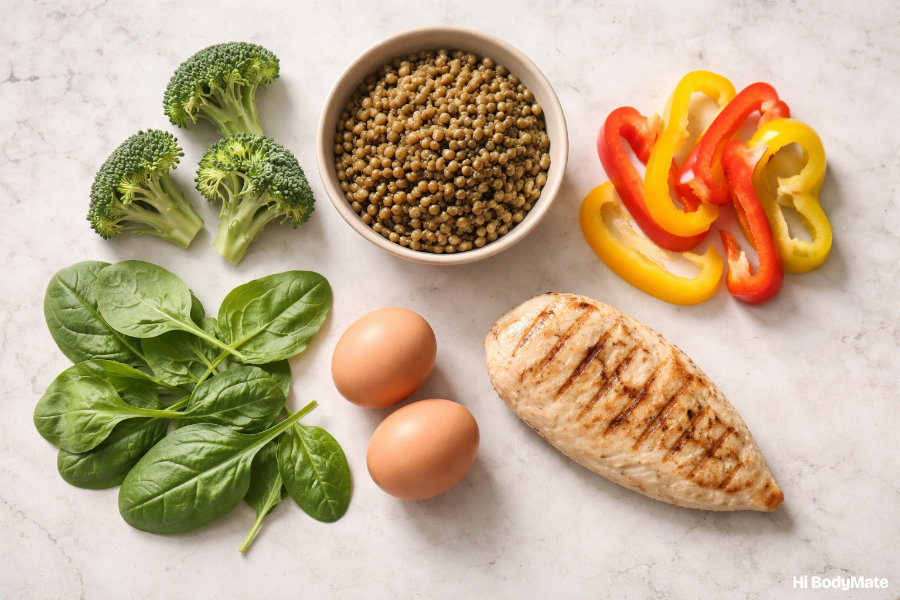
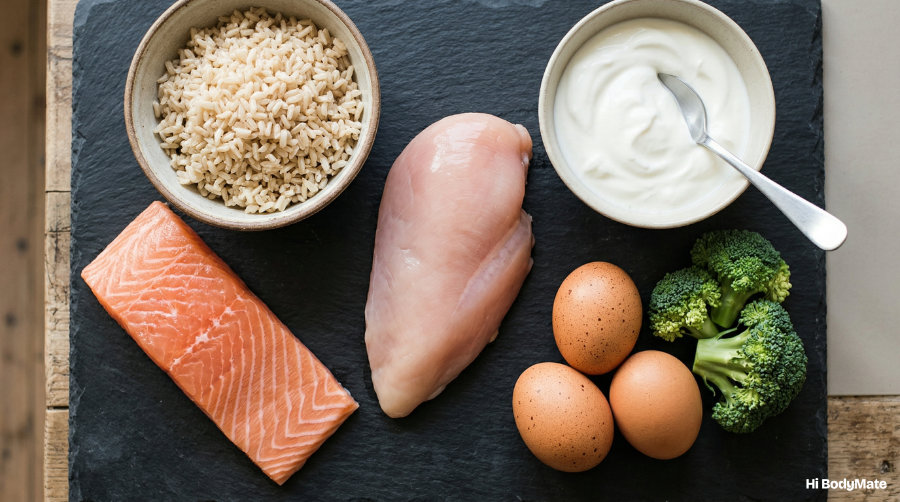
The most reliable muscle-building food: 31g of complete protein per 100g, nearly zero fat, no carbohydrates, and an excellent leucine content (the amino acid that most directly triggers muscle protein synthesis). Leucine acts as a metabolic signal — when blood leucine rises above a threshold, the body's muscle-building machinery (mTOR pathway) activates.
Aim for 150–200g portions. Marinate before cooking to maintain moisture and flavor — the protein content doesn't change with seasoning.
2. Eggs
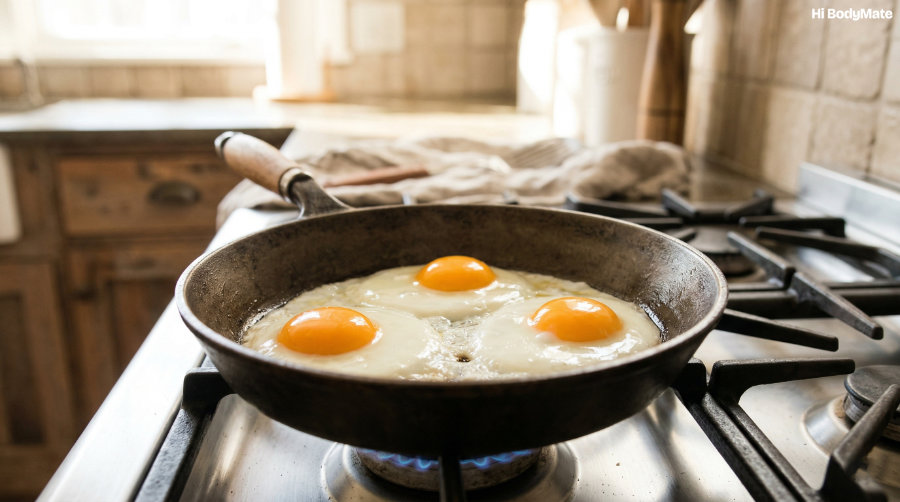
Whole eggs have the highest bioavailability of any protein source — the protein in eggs is utilized by the body more completely than almost any other food. Each egg provides 6g of protein, plus fat-soluble vitamins (D, K2, A), choline for muscle nerve function, and cholesterol which serves as a precursor to testosterone.
Don't discard the yolk in pursuit of "clean" eating. Studies comparing whole egg consumption to egg white consumption after resistance training show significantly greater muscle protein synthesis from whole eggs, despite identical protein content.
3. Salmon and Fatty Fish
Salmon delivers 25g of protein per 100g alongside EPA and DHA omega-3 fatty acids. These omega-3s aren't just cardiovascular — they directly stimulate muscle protein synthesis and reduce exercise-induced muscle inflammation, shortening recovery time between sessions. Studies show omega-3 supplementation increases the muscle-building response to amino acids, especially in older adults.
Two to three servings per week covers both the protein and omega-3 targets efficiently.
4. Greek Yogurt
Full-fat plain Greek yogurt provides 15–20g of protein per 200g serving with a combination of fast-digesting whey protein and slow-digesting casein. This dual-release profile makes it particularly effective as a pre-sleep snack — the casein provides a sustained amino acid supply during the overnight fasting window, supporting muscle repair while you sleep.
Add a handful of nuts or fruit to increase calories without complicating the protein profile.
5. Lean Beef
Beef provides not just high-quality protein (26g/100g) but creatine — a compound that directly enhances muscle energy availability during high-intensity efforts. Most vegetarians report performance improvements when they start eating meat partly because of naturally occurring creatine. Beef also contains zinc and iron at concentrations difficult to match from plant sources.
Choose cuts like sirloin, eye of round, or extra-lean ground beef. Two to three servings per week is a reasonable frequency.
6. Legumes (Lentils, Edamame, Chickpeas)
For those reducing meat consumption, legumes offer the best plant-based protein density. Edamame (young soybeans) is a complete protein — all nine essential amino acids — at 18g of protein per cup. Lentils provide 18g per cooked cup with the added benefit of iron and folate. Pairing legumes with whole grains creates a complementary amino acid profile that approaches animal protein quality.
7. Carbohydrates: The Underrated Muscle Food
Protein gets all the attention, but carbohydrates are the primary fuel for resistance training. Depleted muscle glycogen limits the intensity of training you can sustain — and intensity is what drives muscle growth. Without adequate carbohydrates, protein is diverted toward energy production instead of muscle building.
Best carbohydrate sources for muscle:
- White rice — Fast-digesting, easily tolerated, effective pre- and post-workout fuel
- Oats — Slower-digesting, excellent for pre-workout meals 1–2 hours before training
- Sweet potato — Dense in carbohydrates plus potassium and beta-carotene
- Banana — Convenient portable carbohydrate + potassium, ideal pre-workout
8. Cottage Cheese
High in casein protein (28g per cup), low in fat, and extremely cost-effective. The slow-digesting casein makes it ideal as a last meal before sleep. Cottage cheese also contains tryptophan, which supports serotonin production — relevant for sleep quality, which is where the majority of muscle growth and repair hormones (GH, IGF-1) are secreted.
Track your muscle-building progress with body composition metrics, not just weight.
Calculate body fat % with US Navy method →Timing: When to Eat Matters Too
Distribute protein evenly across 3–5 meals for maximum muscle protein synthesis. Research shows that 40g of protein at one meal stimulates the same muscle growth response as 20g — the excess is simply oxidized. Smaller, more frequent protein feedings maintain elevated blood amino acids throughout the day.
The post-workout window matters but isn't the narrow "anabolic window" it was once thought to be. A protein-containing meal within 1–2 hours of training is sufficient. Total daily protein is more important than exact timing.
Measuring Your Progress
The scale is a poor measure of muscle gain — as you add muscle and lose fat simultaneously ("body recomposition"), your weight may barely change while your composition improves dramatically. Body fat percentage via US Navy method, BAI, or skinfold calipers gives you a more accurate picture of whether your nutrition is working.
Track monthly, not weekly. Meaningful changes in body composition take 8–12 weeks to become statistically detectable.